




Lesson Summary
Students research the physical, biological, and behavioral characteristics of aquatic invasive species (AIS) that help them to out-compete native species. The activity concludes with an Aquatic Invasive Species Advantage Forum where students present their findings and conclusions.
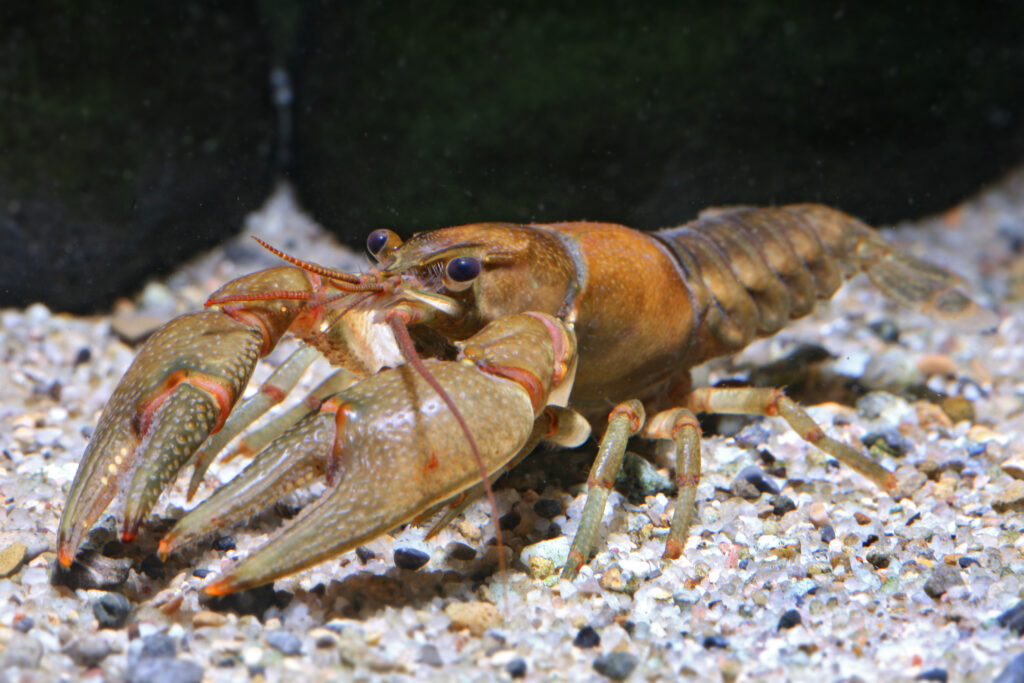
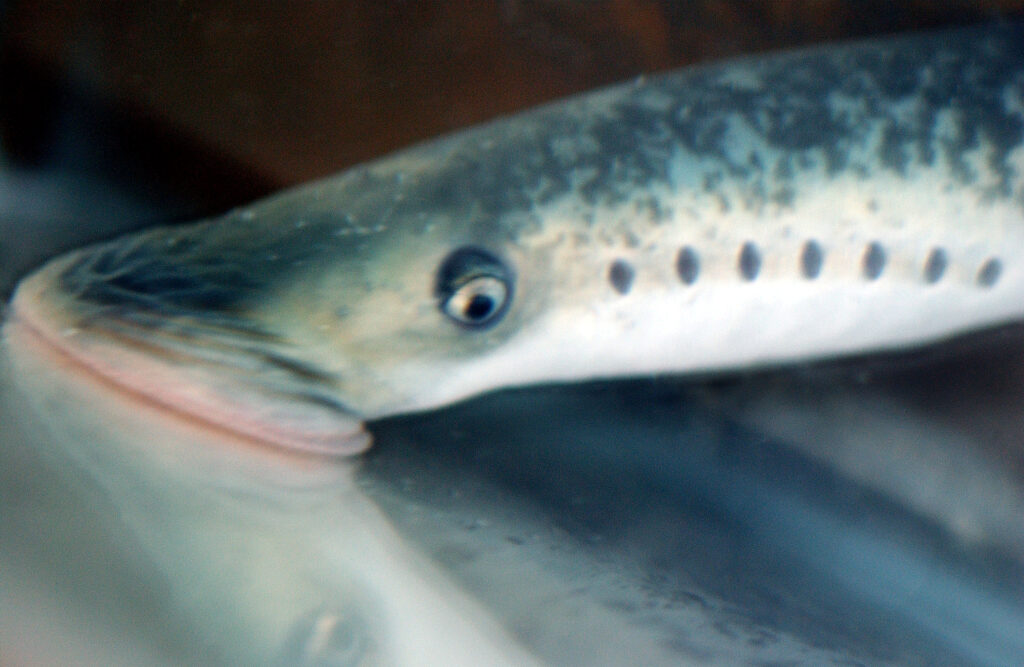
Photo Credit: Michigan Sea Grant
Objectives
Students will be able to:
- Compare and contrast an AIS with a similar native species.
- Describe their life cycles, habitat needs, physical structures, and behavioral characteristics.
- Identify specific adaptive characteristics of AIS that help them to be successful in the environments to which they are introduced.

Lesson Alignment
Next Generation Science Standards: MS-LS2-2, MS-LS2-4, MS-LS2-5, MS- ESS3-3
Materials
The rubric and research guide is provided with this lesson.
- Aquatic Invasive Species Advantage Forum Rubric.
- Invasive Species Research Guide
- Preserved specimens of native and invasive species from the same habitat (if legal to obtain, i.e. zebra or quagga mussels and native mussels). Detailed anatomical charts will suffice.
- Photographs of AIS and the native species being researched.
- Information on the life cycle and behaviors of the animals or plants being compared.
- Computers or tablets with internet access for student research
Time Required
This lesson will require three class periods to complete.
Vocabulary
- Adaptation
- Competition
- Dispersal
- Habitat
Background
Animal and plant anatomies and adaptations are often studied in life science classrooms. Animal behavior is studied less frequently, particularly during the middle school or junior high years. Very seldom are the concepts of anatomy, structure, function and behavior looked at collectively to see how they relate to an organism’s success in its environment.
This activity takes a more encompassing look at these factors as they pertain to the dispersal, reproduction, and successful establishment of aquatic invasive species over similar native species sharing the same habitats. Not all AIS appear to be harmful, but many are detrimental to native species because of rapid reproduction rates, ability to survive in adverse circumstances, and the lack of predatory pressures. The behavior and physical structures of AIS have an effect on all these facets.
Helpful Hints
- The grade level and purpose of this activity will determine its scope. Teachers may want to limit research to a specific pair of organisms for younger students, or may want to look at AIS as a whole to determine the reasons for their success. This activity can fulfill needs in the curricula for anatomy, animal behavior, adaptations, ecology, social studies, and geography.
- Preserved specimens may be available from science supply companies, or it may be possible to borrow them from local college biology departments, US Fish and Wildlife Services offices, state department of natural resources, environmental conservation departments, or Sea Grant offices.
- Suggested research sites for students can be found under the Resources heading below. Teachers may provide additional resources, if desired.
Lesson Procedure
- Provide a definition of AIS, and have student groups examine preserved specimens or representations (e.g., photographs, line drawings, and anatomical representations) of various aquatic invasive and native species that occupy the same habitats.
- After students select an AIS and a related native species to research, have them study those specimens or their representations closely. Explain that they will be conducting research to discover why the AIS can thrive in the habitats they were introduced to. The information researched for the aquatic invasive and native species should include: distribution, habitat needs (including needs for food, shelter, and reproduction), life cycles, and analysis of relationships among body structure, behavior, and function.
- Students conduct research and organize their information on the Aquatic Invasive Species Research Guide worksheet. Then they synthesize the information into conclusions about AIS adaptations.
- Students present their findings in an “Aquatic Invasive Species Advantage Forum” as representative experts on their researched species.
Wrap-Up
- The Aquatic Invasive Species Advantage Forum and the Aquatic Invasive Species Research Guide allow sufficient means for evaluating student progress
Extension
- Relate AIS adaptations to a local problem with such a species. Are there fishing lakes being affected by an AIS invasion? What are the far-reaching effects of this invasion? What is known about the adaptations of this species that will help people to understand and control its spread?
Additional Resources
Websites:
- Great Lakes Aquatic Nonindigenous Species Information System
- U.S. Geological Survey, Biological Resources Division, Nonindigenous Aquatic Species (Gainesville, FL)
- US EPA, Aquatic Invasive Species
- NOAA
- Alliance for the Great Lakes
- Great Lakes Fishery Commission
- Great Lakes Now
- Be a Hero, Transport Zero
- Aquatic Invaders in the Marketplace
- Invasive Crayfish Collaborative
Kits:
- Aquatic Invaders Attack Pack: an interactive kit containing preserved specimen of AIS, a classroom guide, fact sheets, and other resources. Available from Illinois-Indiana Sea Grant. Contact Janice Milanovich at janicem@illinois.edu or visit this page to borrow.
Credits
- Originally created for ESCAPE Compendium, Great Lakes Sea Grant Network
- Created by: Peter L. Edwards, Jay Cooke State Park, Carlton, MN
- Modified by: Terri Hallesy, Illinois-Indiana Sea Grant
This lesson is part of a larger curriculum, Ripple Effects.