




Lesson Summary
Students role-play the part of lake inhabitants and the aquatic invasive species (AIS) that displace the native species. Props are used to help demonstrate how AIS enter a lake or river system, the negative effect they have on the native species and things people can do to stop the spread of AIS.
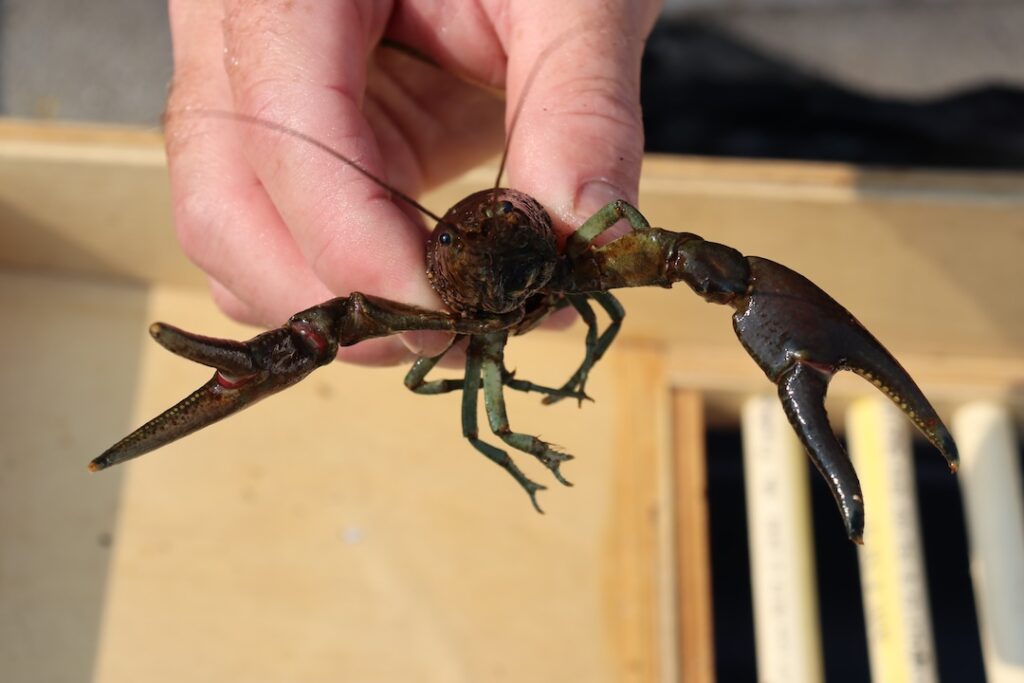
Photo Credit: Minnesota AIS Research Center
Objectives
Students will be able to:
- Identify AIS and ways they are transported.
- Learn about several invasives that affect water habitat.
- Identify the negative or positive effects of AIS on native animals.
- Know how these invasives are transported and ways people can help to stop further spread.

Lesson Alignment
Next Generation Science Standards: MS-LS2-2, MS-LS2-4, MS-LS2-5, MS- ESS3-3
Materials
The script is provided with this lesson.
- Role-playing script and directions
- Picture/drawing of aquatic invasives (Eurasian ruffe, zebra mussel, round goby, purple loosestrife, sea lamprey, Eurasian watermilfoil)
- Bait bucket (from bait stores)
- Bucket
- Seed package
- Two 6-foot ropes
- Toy boat/trailer (or picture)
- Paper fish
- Twelve paper plates, six marked with “X” on both sides
Time Required
This lesson will require one class period to complete.
Vocabulary
- Ballast water
- Round goby
- Eurasian watermilfoil
- Eurasian ruffe
- Invasive species
- Sea lamprey
- Purple loosestrife
Background
Today there are several aquatic invasive species (AIS) that pose a severe threat to all of the lakes and river systems of many states. They are non-native, worldwide agents of habitat alteration and degradation. Natural boundaries are in place that limits the spread of these species, but human actions in the form of recreation and watersports have allowed the invaders to diffuse to other lakes and rivers. There are, however, simple actions that we can do to stop the spread of harmful species.
As stated in the suggested script to read to students, “AIS are invading lakes and rivers by hitching a ride with humans, and there is no stopping them, unless you take actions to prevent it.”
Helpful Hints
- Conduct the lesson in a large area (e.g., classroom, gym, outdoors) so students can spread out.
- Adjust the number of AIS volunteers based on class size; involve all students.
- Any fish species can replace the walleye.
- This activity includes biology, wildlife management, and botany.
- Adapt the script for younger students.
Lesson Procedure
- Begin the program with the students forming a circle in a large open space, and tell them that the circle represents a lake. Explain that they will hear the story of the mighty walleye (or select a different fish) that lives in a big lake. Explain the definition of AIS.
- Tell them that you need volunteers to play the parts of the lake inhabitants. The first volunteer is given a picture or drawing of the fish and taken to the “middle of the lake.” Explain that he or she is the biggest walleye in the lake.
- Drop the paper plates on the ground around the inside of the circle, telling the group that this is the favorite food (the plain plates) and the favorite sleeping spots (plates with an “X”) of the walleye.
- Now the story begins. Explain that the walleye swims and eats all over the lake. Have the volunteer walleye “swim” up to one of the paper plates and pretend to eat or sleep.
- Next, introduce one of the AIS by first showing the students the picture and explaining how to identify it and the harmful effects it has on the habitat. The introduction of AIS can be in any order, but the sea lamprey should be last. See the activity script for information about each invasive species, which props to use with each, and what to tell students about the meaning of each prop. The AIS include Eurasian watermilfoil, purple loosestrife, zebra mussel, Eurasian ruffe, round goby, and sea lamprey.
- Explain how the invader is spread. Demonstrate this by using the appropriate prop. Give the picture to a group of students (about four or five students depending on the number present) and tell them that they are now AIS and must remember how it is spread.
- Next, have the group move one or two steps closer to the center of the circle to represent the loss of habitat for the walleye. After the students move in, say, “But the walleye doesn’t care, it has other places to sleep or eat.”
- Each time a new species is introduced, and the volunteers take a step forward, the prior groups must take a step forward as well, ultimately covering up all the paper plates and surrounding the walleye. Have students think about how the habitat for the native animals is reduced to the point of being a threat for the native species’ survival each time a new AIS is added. Have students notice that the amount of living space is being reduced and is getting smaller.
- The final invader introduced should be the sea lamprey. Set the rope pieces down parallel to each other about three feet apart, “entering” the edge of the lake. Introduce the ropes as a canal that was built to connect the lake to a river. Have a volunteer swim through the “canal” and simulate the attack of the sea lamprey. The student can simply touch the walleye on the arm or wrap his or her arms around the walleye.
- At this point, the demonstration and role-playing are finished. Students can take their seats in the classroom or sit down at their current location for follow-up and review. Ask each group to remind the class how its invasive species is spread. Explain what is being done by the government, industry, academia and others to stop the spread of AIS. This information is found at the end of the role-playing script.
- If desired, ask questions on the material covered in this lesson, to be answered either orally or in written form. This can be used as an evaluation tool. You could also have students match species with its mode of transport.
Wrap-Up
- Students can be evaluated on the discussion following the demonstration or on items listed in step 11.
Extension
- Have the students create a “Public Service Announcement” in the form of posters, signs, audio recordings or videos informing other classes on ways to stop the spread of AIS.
- Visit a local lake, pond or boat access and look for signs of AIS. At the boat landing, see if there are warning signs about one of the invasives. If there are none, ask the water resource manager or fisheries biologist at your local Natural Resources, Environmental Conservation Department or Sea Grant program to post some signs.
- Visit a lake known to contain AIS and monitor the growth in population or the spread in infested areas.
- Have the students identify other AIS.
Additional Resources
Factsheets and Publications:
- Factsheets on aquatic invasives can be obtained from state Sea Grant programs. For your closest program, visit the National Sea Grant College Program Web site and click on state program.
- Ohio Field Guide to Aquatic Invasive Species
- Attack Pack Aquatic Invader Fact Sheets
Role-Playing Activity Script and Directions
This is a compilation of information about various AIS, directions for conducting the activity “Don’t Stop for Hitchhikers!” and suggestions for what to say and do during the activity. Note that italics are used for all sections that are the exact words teachers could say during this activity.
Have students form a large circle. Say:
This large circle represents a lake, and you will hear the story of the mighty walleye (or select a different fish) that lives in a big lake. We are going to do an activity called “Don’t Stop for Hitchhikers!” Invasive species are invading lakes and rivers by hitching a ride with you, and there’s no stopping them, unless you do something about it. You will all play the part of inhabitants of this lake and learn about invasive species.
Explain the definition of aquatic invasive species (AIS).
Aquatic invasive species—organisms introduced into aquatic habitats where they are not native—are worldwide agents of habitat alteration and degradation. A major cause of biological diversity loss throughout the world, they are considered “biological pollutants.” They compete for food and habitat of native species. Most species introductions are through human activity. Some introductions, such as carp and purple loosestrife, are intentional and do unexpected damage, but many introductions are accidental. Most non-native introductions are ecologically harmless and some are beneficial, but a few invasive introductions are harmful to recreation and ecosystems. Aquatic invasive species have actually caused the extinction of native species.
Ask for volunteers to play the parts of the lake inhabitants:
I will need volunteers to play the inhabitants of this lake.
Give the first volunteer a picture or drawing of the fish, and take him or her to the “middle of the lake.” Say:
You are the biggest walleye in the lake.
Drop the paper plates on the ground around the inside of the circle, and say:
This is the favorite food (the plain plates) and the favorite sleeping spots (plates with an “X”) of the walleye. The walleye swims and eats all over the lake.
Have the volunteer walleye “swim” up to one of the paper plates and pretend to eat or sleep.
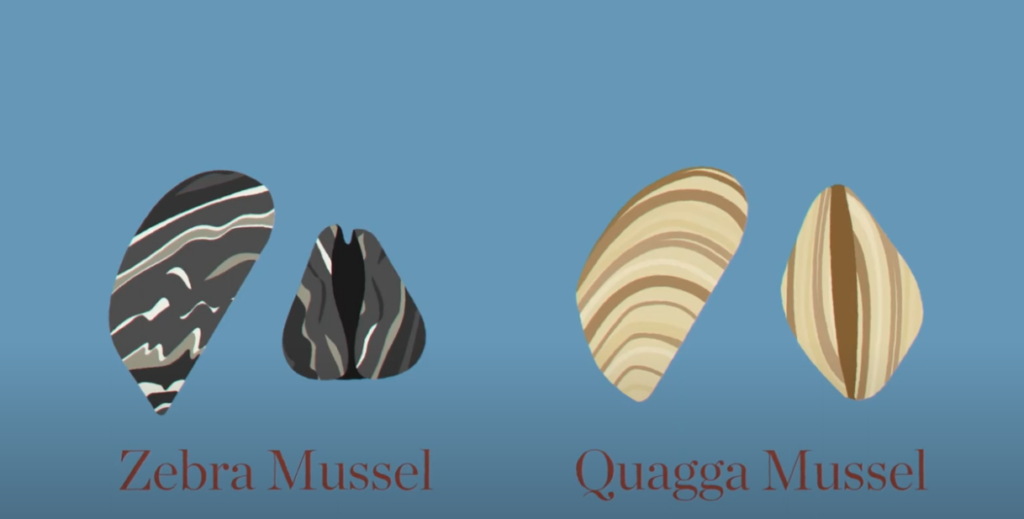
Show a picture of the quagga mussel and explain how to identify it, the harmful effects it has on the habitat, and how the invasive is spread. (The introduction of the aquatic invasives can be in any order, but the sea lamprey should be last. For ease of use, this script suggests an order and starts with the quagga mussel.) Read or summarize information below:
Quagga mussels are small, fingernail-sized mussels native to Asia, which may produce as many as 1 million eggs per year. They were discovered in Lake St. Clair near Detroit in 1988. Zebra mussels have now spread to parts of all the Great Lakes and the Mississippi River and are showing up in inland lakes. Quagga mussels clog water systems and irrigation pipes. They have severely reduced and eliminated native mussel species. Microscopic larvae may be carried in live wells or bilge water.
Adult quagga mussels can attach to boats that are docked in the water. Adult life size: 0.5 to 1.5 inch.
Prevention: Tell students: Drain water from live wells in the same lake or river; do not dump in any other body of water. Since quagga mussels can attach to any hard surface, clean your boat and trailer and drain motor before moving to another waterbody.
Use the boat to represent how they are transported.
Give the picture to a group of students (about four or five students depending on the number of students present) and tell them:
You are now the AIS and must remember how it is spread.
Have the group move one or two steps closer to the center of the circle to represent the loss of habitat for the walleye. After the students move in, say:
But the walleye doesn’t care, it has other places to sleep or eat.
Introduce the next species. An explanation of ballast water appears with round goby information.
Round goby is a bottom-dwelling fish, native to Eastern Europe, which entered the eastern Great Lakes in ballast water.
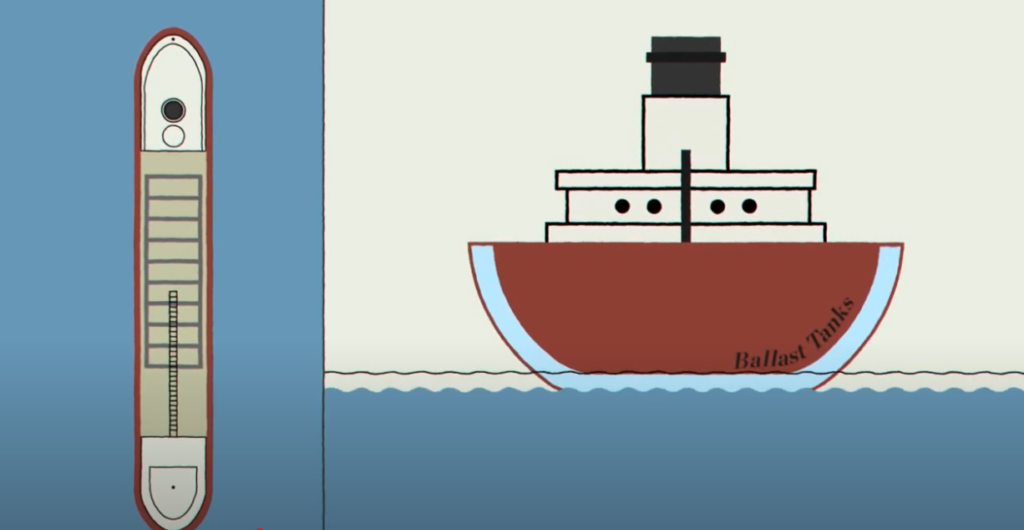
Ballast water: Ships take on ballast water for stability during travel. This water is pumped out when the ships pick up their loads in Great Lakes ports. Because the ships make the crossing so much faster now and harbors are often less polluted, more AIS are likely to survive the journey and thrive in the new waters.
Round gobies are aggressive fish that can grow quickly to a size of up to 7 inches, although most adults are typically 5-6 inches long. The negative effects of the round goby include: dominating the fishery quickly, having no effective predators, can spawn several times per year and compete with native bottom-dwellers like sculpins and log perch. They have proven to be harmful to Great Lakes and inland fisheries.
Prevention: Tell students: Clean off plants and animals from boats, trailers, motors and gear. Drain water from live well; do not dump that water into any other waterbodies. Dry everything for at least 5 days.
Use the bucket filled with water to represent ballast water.
Each time a new species is introduced and the volunteers take a step forward, the prior groups must take a step forward as well, ultimately covering up all the paper plates and surrounding the walleye.
Have students think about how the habitat for the native animals is reduced to the point of being a threat for the native species’ survival each time a new AIS is added. Have students notice that the lake is getting smaller. Ask the students:
Do you notice that the living space is getting reduced and is getting smaller? Think about how the habitat for the walleye is being threatened.
Eurasian watermilfoil was accidentally introduced to North America from Europe, spread westward into inland lakes primarily by boats, and reached Midwestern states between the 1950s and 1980s. It can form thick underwater stands of tangled stems and vast mats of vegetation at the water’s surface. In shallow areas the plant can interfere with water recreation such as boating, fishing, and swimming. Its floating canopy can also crowd out native water plants. A key factor in the plant’s success is its ability to reproduce through stem fragmentation and runners. A single segment of stem and leaves can take root and form a new colony. Fragments clinging to boats, motors and trailers can spread the plant to other lakes. Milfoil may become entangled in boat propellers or may cling to keels and rudders of sailboats. Stems can become lodged among any watercraft apparatus or sports equipment that moves through the water, especially boat trailers.
Prevention: Tell students: Clear and clean off all aquatic plants from boats, motors and trailers.
Use the boat to explain how Eurasian watermilfoil gets tangled in the trailer and boat prop.
Eurasian ruffe (Pronounced “ruff”) was introduced to Duluth, Minnesota harbor, probably in tanker ballast water, around 1985, and has spread to other rivers and bays around Lake Superior. The ruffe’s ability to displace other species in newly invaded areas is due to (1) its high reproductive rate, (2) its feeding efficiency across a wide range of environmental conditions, and (3) characteristics that may discourage would-be predators such as walleye and pike. Eurasian ruffe could be accidentally transported in live wells, bilge water, bait buckets, and ballast water. Adult life size: 3 to 5 inches.
Prevention: Tell students to: Empty boat live wells and bilge water at water access points. Empty bait bucket contents in the trash.
Use the bait bucket to demonstrate how ruffe may be spread.
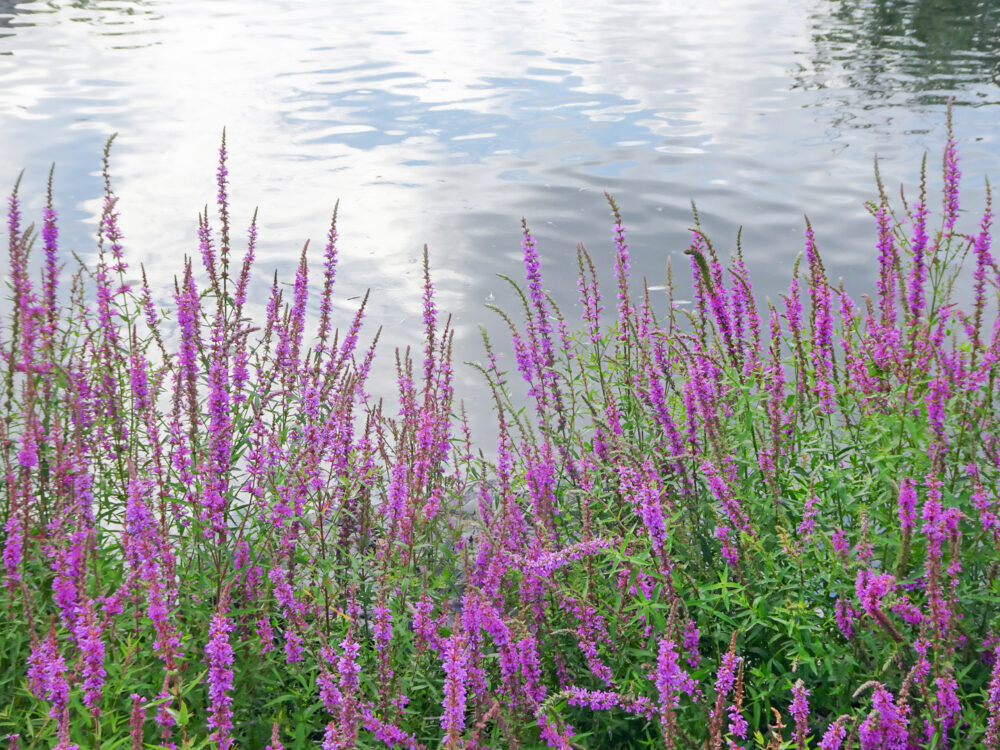
Purple loosestrife is a wetland plant from Europe and Asia that was introduced into the East Coast of North America in the 1800s. First spreading along roads, canals, and drainage ditches, then later distributed as an ornamental plant, this invasive plant is in 46 states and all Canadian border provinces. Purple loosestrife invades marshes and lakeshore, replacing cattails and other wetland plants. The plant can form dense, impenetrable stands that are unsuitable as cover, food or nesting sites for a wide range of native wetland animals, including ducks, geese, rails, muskrats, frogs, toads, and turtles. Many rare and endangered wetland plants and animals are also at risk. A major reason for purple loosestrife’s expansion is a lack of effective predators in North America. Seeds escape from gardens and nurseries into wetlands, lakes and rivers. Once in aquatic systems, moving water and wind easily spread loosestrife seeds. Plant height: 2 to 7 feet.
Prevention: Tell students: If you see them in a wetland area, don’t pick them and take them somewhere else. Don’t buy purple loosestrife plants from nurseries instead select native loosestrife species where available. Avoid wild seed mixtures that contain purple loosestrife seeds.
Use the seed packet to show how careless gardeners help spread purple loosestrife.
The final invader introduced should be the sea lamprey.
Sea lamprey is an elongated fish with a circular suctioning mouth with sharp rasping teeth on its
inner surface and is native to the coastal regions of the Atlantic Ocean. They entered the Great Lakes through the Well and Canal around 1921. Sea lamprey contributed greatly to the drastic decline of whitefish and lake trout in the Great Lakes. Negative effects of the sea lamprey: One adult can consume 40 pounds of fish as an adult. Adult size: 12-20 inches.
Prevention: Tell students: Chemical controls, called lampricides, are being used by water resource managers, which help keep sea lamprey populations in check.
Set the rope pieces down parallel to each other about three feet apart, for “entering” the edge of the lake. Introduce the ropes as a canal that was built to connect the lake to a river.
Have a volunteer swim through the “canal” and simulate the attack of the sea lamprey. The student can simply touch the walleye on the arm or wrap his or her arms around the walleye.
Students can resume their seats in the classroom or sit at their current location for a follow-up and review. Ask each group to remind the class how its invader is spread (optional).
What are some other AIS?
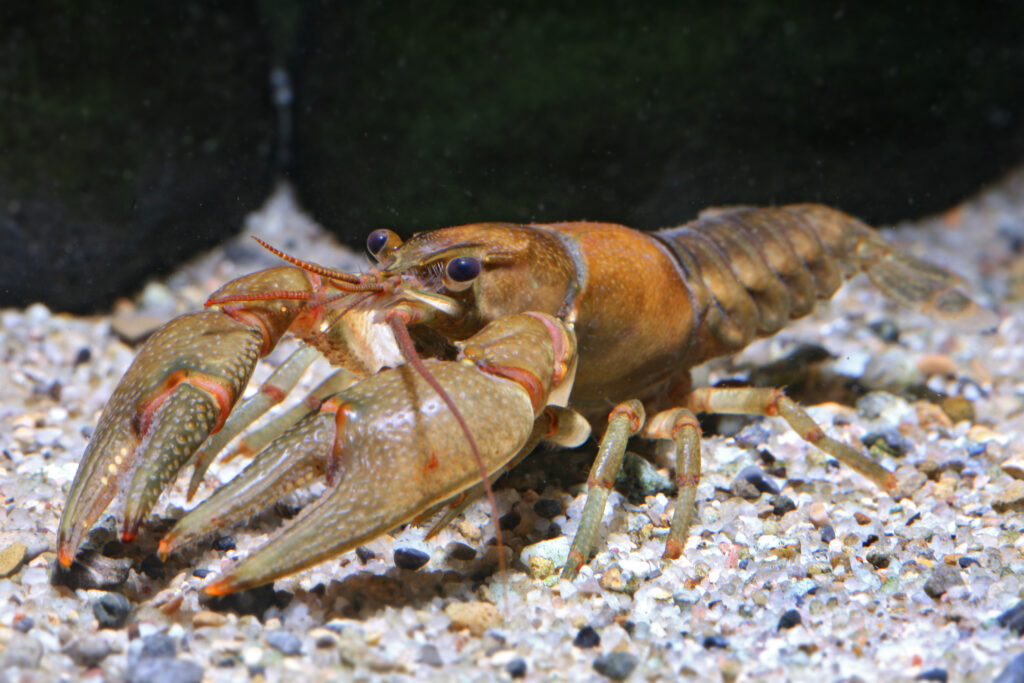
Spiny waterflea, rusty crayfish, white perch, flowering rush, curly-leaf pondweed, alewife, and mosquito fish.
Credits
- Originally created for ESCAPE Compendium, Great Lakes Sea Grant Network
- Created by: Peter L. Edwards, Jay Cooke State Park, Carlton, MN
- Modified by: Terri Hallesy, Illinois-Indiana Sea Grant
This lesson is part of a larger curriculum, Ripple Effects.