




Lesson Summary
Students make presentations and/or create videos about their crayfish research project(s). In this way, students strengthen their understanding and skills and magnify their impact in the community.
This lesson provides guidance on conducting presentations and effectively communicating science to the public.
Audiences could include city or town leaders, parents, the rest of the school including administration, and/or another school, as well as restoration partners, landowners, and the community at large.
The exercise helps students further reflect on what they have learned throughout their study of crayfish and freshwater ecosystems, understand that their work is important to the public, further educate others on what they have learned, and develop their public speaking and presentation skills.
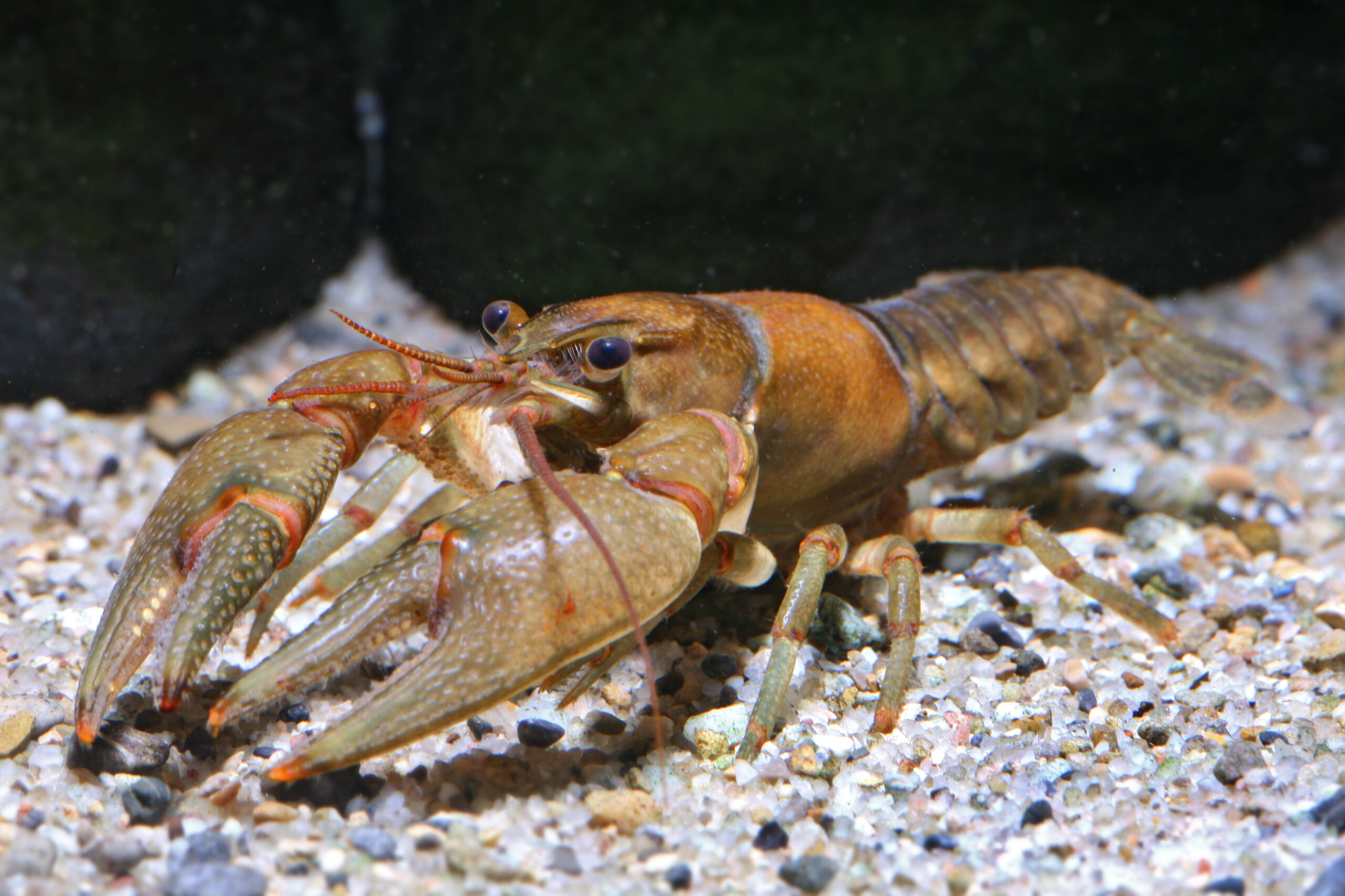
Photo Credit: US Dept. of Agriculture

Objectives
Students will accomplish the following goals upon completing this lesson:
- create presentations and/or videos that engage the community.
- increase skills of organizing information, presenting it to others, and working collaboratively as teams.
Students will meet the following objectives upon completing this lesson:
- create effective presentations and/or videos that educate the community about their work to investigate native and invasive crayfish and their ecosystems in the local area.
- present work effectively to peers and the broader community with the assistance of multimedia technology.

Lesson Alignment
Next Generation Science Standards: Building Toward: MS-ETS1-1, HS-ETS1-1, HS-ETS1-3
Next Generation Science Standards: Crosscutting Concepts Structure and Function, Systems and System Models, Stability and Change
Next Genertion Science Standards: Science & Engineering Practices Constructing Explanations (forscience) and Designing Solutions(for engineering), Obtaining, Evaluating, and Communicating Information, Engaging in Argument from Evidence
Common Core State Standards
Speaking and Listening Standards for Gr. 6- S4, S6 (Similar standards exist for Gr.4-5 and 7-12)
College and Career Readiness Anchor Standards for Writing- S6, S7
Materials
Access printed copies or electronic versions of lesson materials below.
- Computer access and software such as PowerPoint, Google Slides, Keynote, Prezi, and/or iMovie to create multimedia presentations and/or videos
- Display screen
- Copies of the “Presentation Rubric” at the end of the lesson, one for each student
- Large pieces of paper or poster board (one per student or group) optional for activity in the Enrich/Extend section of learning cycle
Invasive Crayfish Collaborative Website
Additional Resources
Investigating Crayfish and Freshwater Ecosystems
Full Curriculum
Time Required
Completion of this lesson may require multiple class periods to complete.
Activity Set-Up
Schedule an event well in advance and, if desired, work with partners to invite community members such as funders, parents, and administrators, as well as partner organizations, such as governmental agencies and nonprofit organizations interested in crayfish (e.g. Invasive Crayfish Collaborative), freshwater ecosystems, and/or water quality.
Encourage students to dress appropriately when it is time to present to the public.
Consider encouraging students to incorporate props into their presentations which will better engage the audience and help convey their points.
Make copies of the Presentation Rubric, one for each student.
Lesson
Engage and Explore
Ask students why it’s important for the public to understand science. What happens when people don’t have access to accurate scientific information? Talk as a group and then brainstorm different ways science can be shared with the community.
Show students examples of types of science communication (e.g., infographics, articles, posters, street murals, social media posts). Resources can be found in the Expand Knowledge + Skills section.
Tell students that your class will be planning a community event where they will have the chance to present their own data and work. Students will decide as a class what the event will look like, who should be invited, and how they will present their work.
Talk with students about ideas for the format of the community presentations and/or videos. This will give them the opportunity to incorporate their ideas for the event(s) and have more “buy-in” and enthusiasm for it.
Have students discuss their ideas in small groups before sharing them out in a whole class discussion.
Explain
- Depending on what you decide as a class, explain to students what will be expected of them. For example, tell them that they will be working with small groups to create 5–10-minute-long oral presentations or videos about their project. Engaging multimedia content should be incorporated using software such as PowerPoint, Google Sheets, Keynote, or Prezi, or videos can be created using software such as iMovie. Encourage students to conduct additional research to enhance their presentations/videos and bolster their arguments.
- Discuss or provide students with a sample outline they can use to help them structure their presentations and videos. For example, instruct students to include details such as:
- All the elements of the Crayfish Study, including visuals (see lesson 5)
- The native and invasive crayfish species found in their state
- The anatomy, life cycle, and importance of crayfish
- What they learned during their field work and/or classroom activities
- How their field work enhanced what they learned in the classroom
- How they changed because of this project
- Details such as these are especially important if community partners, funders, and/or school administrators will be in the audience.
- Pass out copies of the “Presentation Rubric” at the end of the lesson (or your own rubric) to guide student learning and let them know how they will be assessed. Tell students that they will complete the “Self-Score” portion of the rubric and turn it in to you before they present.
- If desired, work with partner organizations to develop an agenda for the community presentations. Consider inviting other organizations to attend who can staff tables and offer volunteer opportunities after the presentations are complete.
- Offer students the opportunity to practice their presentations beforehand. A “dress rehearsal” in the space where students will be presenting publicly is helpful.
- On the day of the event, sit back and watch students shine!
Extend
Collaborate with grade level English/Language Arts teachers to support standards that have been taught in the students’ English classes. Students could do a joint project in which they work on science and literacy together in both their English and science classes.
Students can present to younger students to teach them about their work.
Present one or more awards to outstanding class members, either individuals or groups. Awards could be for exceptional additional volunteer efforts, the most outstanding restoration plan, etc.
Identify students who have photography and/or film experience and ask them to use a camera(s) and/or video camera(s) to document the community presentations. Students can then share their presentations via YouTube, the school website, social media, etc., as allowed by school and district policy.
Evaluate
Evaluate group presentations/projects using the rubric.
Record levels of oral participation and group participation throughout the project.
Ask students and community members to provide feedback about your event so it can be used to improve future events.
Resources
Expand Knowledge + Skills
Invite professionals to serve as keynote speakers for community presentation events. This can help enhance everyone’s understanding of freshwater ecosystems.
Encourage students in the audience to ask questions after each presentation. Questions can be answered by presenting students, as well as professionals.
Science Communication and Presentation Skills
- “10 Forms of SciComm for Everyone” by Aimen Arshad | LINK
- McGivern, H. “An Introduction to Science Communication: Translating Your Research for a Non-Specialist Audience”, Oxford University Hospitals | LINK
- “Science Murals, Communicating and Visualizing Science via Public Art”, Art + Bio Collaborative | LINK
- “How She Teaches Presentation Skills” by How She Teaches | LINK
Education Standards

This lesson is part of a larger curriculum, Investigating Crayfish and Freshwater Ecosystems.


